
Targeted reduction of subcutaneous fat pads without diet and sport.
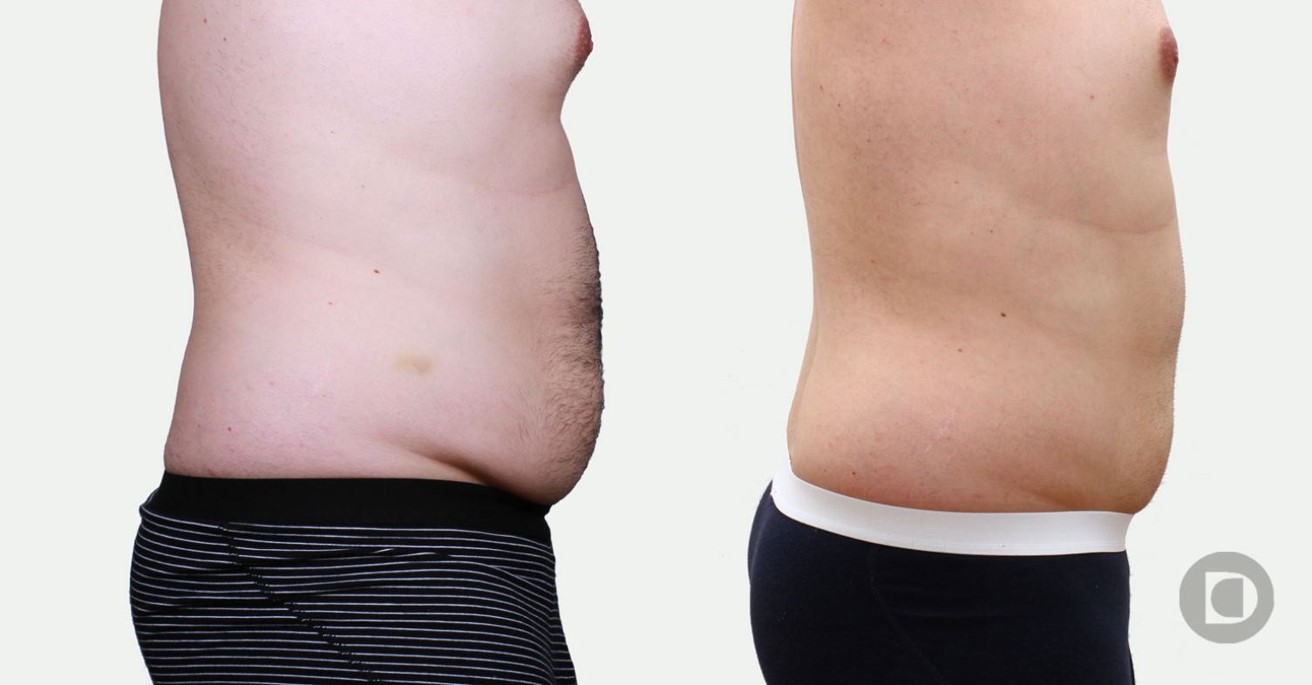
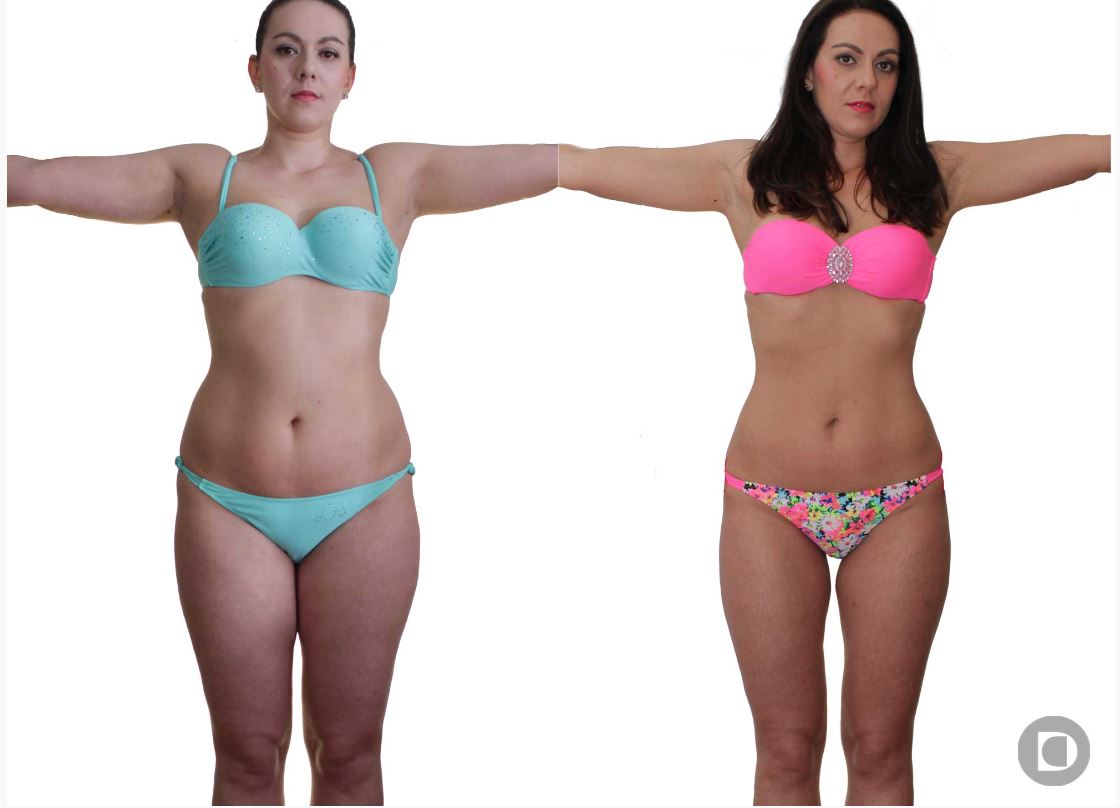
Medical cryolipolysis is a procedure that permanently removes fatty tissue by cooling, without a recovery period, scarring or surgery. Each treatment reduces stubborn fat pads on so-called problem areas of the body – the abdomen, upper thighs, flanks, back or knees – by up to 30%. You can resume your daily activities immediately after the treatment.
Medical cryolipolysis intervenes on adipose tissue, which is a hormonally active organ, and therefore lipolysis (lysis – Latin for disintegration, lipo – Latin for fat) is a specialist medical procedure. Our medical cryolipolysis machine is a medical device, with all the necessary approvals to carry out the procedure, which involves intervening in the body, in the subcutaneous tissue, where the fatty tissue is located.
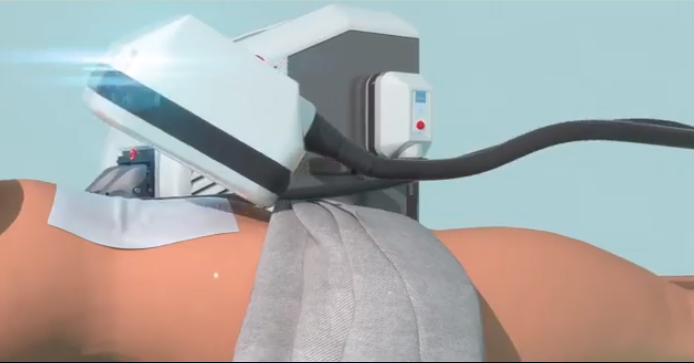
The device is designed to attach skin folds and fatty tissue to the cooling surface of the device using a vacuum. The procedure is outpatient, takes 70 minutes and is painless. The final effect is visible after a month and a half, when the therapy can be repeated. After the procedure, the skin remains red and sensitive to the touch for some time. Transient bruising of the skin is rare and no wounds or scars appear.
Medical cryolipolysis is an additional option that can accelerate body contouring, particularly effective when combined with a proper diet and regular physical activity at home or in a fitness programme. We will be happy to advise you on its implementation at the Derma Center Rogaška/Maribor.
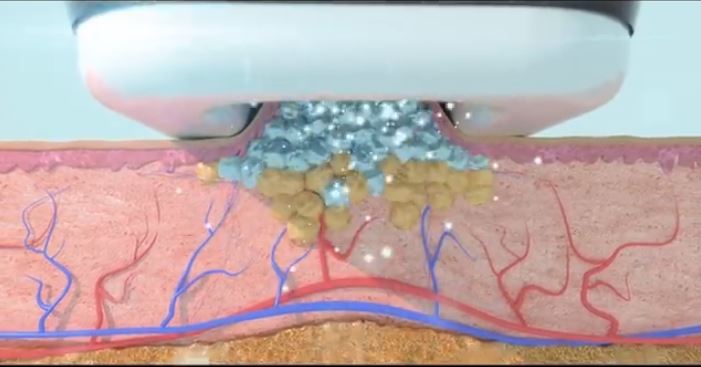
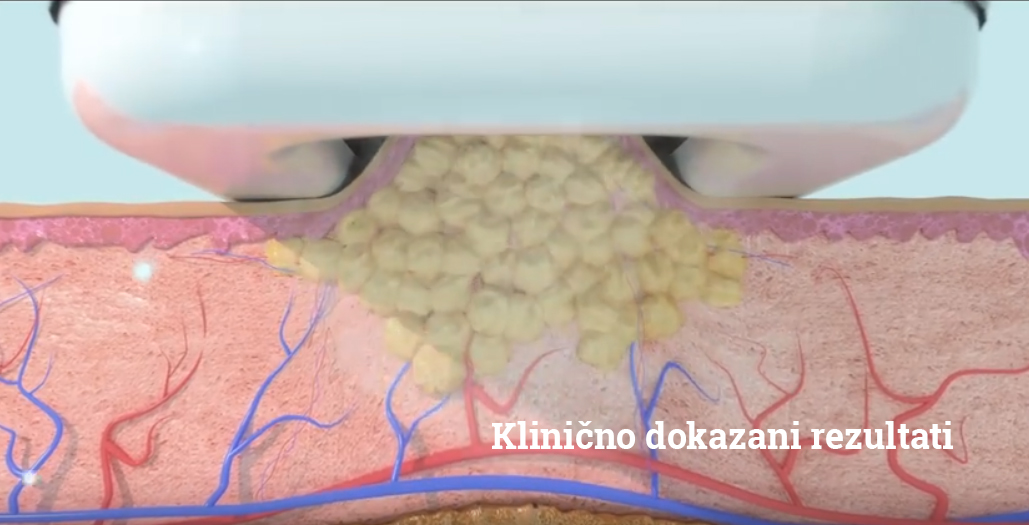
Medical cryolipolysis works by controlled cooling of subcutaneous adipose tissue to a temperature of – 8 °C over a period of time. The vacuum works by temporarily reducing the flow through the adipose tissue, which increases the effect of the cold on the fat cells. These are more sensitive to cold than other cells of the skin, blood vessels, nerves, which remain intact. In fat cells, the cold causes minimal inflammation and the gradual collapse of about 30% of the fat cells in the area where medical cryolipolysis is performed. Subsequently, the decayed cells and their contents are removed by the body’s own mechanisms of cell metabolism and lymphatic veins. The fatty acids from the fat cells are transported to the liver where they are broken down. After undergoing medical cryolipolysis, it is beneficial to be well hydrated, so you are advised to drink an extra 1.5 litres of water or unsweetened tea every day.
What is the difference between medical cryolipolysis and cryolipolysis?
Medical cryolipolysis differs from cryolipolysis in five important ways:
- Medical cryolipolysis is carried out after examination and under the supervision of a doctor in premises licensed by the Ministry of Health for the practice of medicine.
- Medical cryolipolysis (and cryolipolysis in general) is an intervention in the body and should only be performed under the conditions listed above.
- The device we use is CE-certified for medical use. The device’s vacuum and the size of the nozzle are strong and large enough to effectively draw the skin fold and subcutaneous tissue into the device’s nozzle, temporarily reducing blood flow through the skin and cooling it evenly. The level of vacuum and the skin temperature are measured at all times. All of the above is of paramount importance for the safety and effectiveness of the medical cryolipolysis procedure.
- The treatment is personalised, i.e. it is tailored to the individual by measuring the thickness of the skin fold of the treated area before the treatment, which is entered into the device’s computer. It then adjusts the level of vacuum, which is maintained and monitored throughout the procedure, which is important for the effectiveness of the procedure.
- The cold is transferred to the skin via metal plates in the nozzle, which are more conductive to cold than, for example, silicone nozzles in other devices, increasing the effectiveness of the procedure.
Which parts of the body can a medical cryolipolysis procedure be performed on?
Medical cryolipolysis can be performed on the following parts of the body:
- abdomen
- flanks
- back
- knees (inner parts)
- upperarms
- skin under the chin
- lateral chest part
The treatment areas differ for women and men. Fat pads that are hard to the touch, covered or surrounded by a lot of connective tissue are not suitable for medical cryolipolysis. In such cases, your specialist doctor will advise you on appropriate therapies.
After the discussion, the doctor will examine the area where you would like the treatment to be carried out. The thickness of the skin fold will be measured, photographed and marked if necessary. Medical cryolipolysis takes place on a treatment bed. Applicators are placed on the body and you can read, listen to music, surf the web or simply relax during the procedure, which takes about 1 hour.
At the end of the treatment, the treated area is massaged, cleaned and examined.
Can the skin freeze during the procedure?
The temperature at which skin damage occurs is -10 °C. The surface temperature of the skin in medical cryolipolysis is much higher. Fat cells that are exposed to – 4 °C for a prolonged period of time are permanently damaged. In medical cryolipolysis, the subcutaneous fatty tissue is cooled to – 8 °C. If the contraindications for the procedure are not observed and the treatment is carried out by untrained personnel, damage to the skin and subcutaneous tissue can occur.
Is medical cryolipolysis a painful procedure?
Medical cryolipolysis is almost painless due to the local numbing of the skin by the cold. At the beginning of the treatment, there is only a transient sensation of cold and compression of the vacuum.
When can the effect be seen?
The body’s own cellular metabolic mechanisms break down the adipose tissue in the treated area within 2-4 months after the procedure. Until the final effect of medical cryolipolysis is achieved, you should avoid all high-calorie foods, as otherwise the body may re-store the fat released by cryolipolysis in the adipose tissue.
Can adipose tissue recover after medical cryolipolysis?
Studies and practical experience have shown that cells destroyed by medical cryolipolysis (up to 30% of the fat cells in the treated area) do not recover because they have been destroyed.
Is time off work and recovery necessary?
No, on the contrary, after medical cryolipolysis, you can immediately go about your daily activities. After the treatment, you may feel a few minutes of freezing in the treatment area, but this will disappear. In very rare cases, a sensation similar to muscle soreness following intense exercise may occur after the procedure in the treated area.
Very rarely, bruising, redness of the skin and a transient decrease in skin sensitivity to touch occur. These side effects do not last more than a week in most cases. Occasionally, tingling or mild muscle soreness-like sensations may occur in the treated area for several weeks after medical cryolipolysis. The latter is more common in men. Sometimes patients notice an increased frequency of bowel movements, which may last for several days after the procedure.
How often can medical cryolipolysis be repeated?
Medical cryolipolysis can be repeated up to three times in the same area under medical supervision. There must be at least 6 weeks between treatments (at least to wait for the final result of the procedure). Before this period has elapsed, the areas treated with medical cryolipolysis are still in the process of breaking down the adipose tissue.
Is the effect of medical cryolipolysis scientifically proven?
Medical cryolipolysis has been proven in numerous medical studies:
Zelickson B, Egbert BM, Preciado J, Allison J, Springer K, Rhoades RW, Manstein D.: Cryolipolysis for noninvasive fat cell destruction: initial results from a pig model. Dermatol Surg. 2009 Oct;35(10):1462-70 PMID 19614940
Avram MM, Harry RS: Cryolipolysis for subcutaneous fat layer reduction. Lasers Surg Med. 2009 Dec;41(10):703-8 PMID 20014262
Coleman SR1, Sachdeva K, Egbert BM, Preciado J, Allison J: Clinical efficacy of noninvasive cryolipolysis and its effects on peripheral nerves. Aesthetic Plast Surg. 2009 Jul;33(4):482-8. doi: 10.1007/s00266-008-9286-8. Epub 2009 Mar 19. PUBMED
Nils Krueger, Sophia V Mai, Stefanie Luebberding, Neil S Sadick: Cryolipolysis for noninvasive body contouring: clinical efficacy and patient satisfaction. Clin Cosmet Investig Dermatol. 2014; 7: 201-205. Published online Jun 26, 2014. PMCID:PMC4079633.
Nelson AA, Wasserman D, Avram MM: Cryolipolysis for reduction of excess adipose tissue. Semin Cutan Med Surg. 2009 Dec;28(4):244-9. PMID 20123423
Who is not suitable for medical cryolipolysis?
A check-up with your doctor will determine if you are suitable for medical cryolipolysis.
There are a number of conditions and diseases for which the procedure is not allowed. Before the procedure, your doctor will examine you, assess the condition of your skin and the thickness of your subcutaneous fat, and ask you about certain conditions and diseases, medications you are taking, etc.
If there are no contraindications to the procedure, medical cryolipolysis is a safe and effective procedure to reduce subcutaneous fat deposits.
What is the difference between medical cryolipolysis and UltraShape Power?
Both treatments have in common that they shape and reduce subcutaneous adipose tissue, which is resistant to hypocaloric diet and exercise.
Both technologies are approved by the FDA (US Food and Drug Administration) for non-invasive reduction of subcutaneous fatty tissue and do not require a recovery period. The effect is not immediate and a period of several weeks is needed to notice the final effect, which is then maintained by an appropriate diet and exercise to prevent weight gain and loss of effect of the procedure.
Difference in operating mode
Medical cryolipolysis involves targeted freezing of subcutaneous fat cells, which gradually degenerate and are eliminated from the body naturally over a period of weeks after the procedure. The procedure does not damage the surrounding skin, blood vessels or nerves, which are more resistant to cold than fat cells. Medical cryolipolysis removes 25-30% of the fatty tissue in a single procedure in a specific area.
UltraShape Power uses the energy of focused ultrasound waves to act exclusively on the fat cell wall, which is mechanically damaged during the procedure. The fat cells collapse and are then eliminated from the body through natural channels (lymphatic veins and digestive system) within a few weeks. The effect is noticeable after 2 to 4 weeks after the procedure, with an average reduction of 4 cm and removal of up to 32% of the fat layer.
- Smaller areas of the body are easier to perform UltraShape Power, which is also more effective on these areas.
- The UltraShape Power procedure takes less time than medical cryolipolysis. One body region: 20-40 minutes Ultrashape Power / 75 minutes medical cryolipolysis.
- Medical cryolipolysis is a slightly more painful procedure than UltraShape Power.
The uncomfortable pulling and cold sensation at the beginning of the procedure is more pronounced with medical cryolipolysis than with Ultrashape Power, which is mostly painless, with only a slight stinging occasional pain during the procedure. Usually, after medical cryolipolysis, there is moderate pain in the treatment area for a few days to weeks, which is not the case after the Ultrashape Power procedure.
Various side effects after the procedure
They are rare in both procedures. Redness, swelling, bruising, abrasion, skin pigmentation change (temporary) and paradoxical hyperplasia of adipose tissue may occur after medical cryolipolysis. Ultrahape Power may very rarely cause redness and minor blistering.
GALLERY
Appointments and further information
To book an appointment, contact us Monday to Friday from 8:00 to 16:00 on the following telephone number: 064 12 80 15 or send an e-mail: info@derma-rogaska.si