

Many people notice troublesome growths on their neck, torso, underarms or face.
It is a good idea to show them to your physician or dermatologist, however many non-invasive aesthetic procedures can also be used to effectively remove them and make your skin look healthier and more beautiful.
Types of growths
There are several types of skin lesions and each needs a precise diagnosis. In particular, a distinction must be made between the dangerous ones, the so-called benign ones, and the harmless ones, which are merely aesthetically disturbing. Potentially dangerous growths and lesions can only be removed surgically and histological examination is essential.
Fortunately, pedunculated fibromas, age warts and spots, and angiomas of the neck and armpits are usually harmless. Therefore, they cannot aggravate the medical condition and their removal is not necessary, except for aesthetic reasons.
Removal
Aesthetic medicine encompasses effective surgical and non-surgical methods of removal. Among the former, curettage or excision, or the so-called shave excision, are the most common. Both procedures leave a more or less visible scar. Non-surgical methods include: removal with a sharp spoon down to skin level, electric current procedures such as electrocoagulation, electrodesiccation, fulguration and electrocautery, removal with radiofrequency current, an ablative laser or a localised, medium-depth chemical peel.
IMPORTANT: Only after diagnosis can the most appropriate form of removal be determined.
Non-surgical interventions
Surgery can be avoided for the removal of most benign skin growths. Surface removal with ablative CO2 or Er: YAG laser or radiofrequency are available. The latter is an improved form of electric current used in electrosurgery. As they are technically less demanding procedures, they also cause significantly less tissue damage and associated scarring.
Electrosurgery
Since the discovery of electric current, it has been used in medicine for excision, removal and coagulation of tissues. Depending on the different parameters of frequency, intensity and voltage of the current, a distinction is made between electrocautery and hyfrecation.
The passage of the electric current through the tissue results in a pronounced overheating of the tissue and thus in the targeted destruction of cells. As the smell of the burnt skin and the effect are similar to third-degree burns, the procedure is colloquially known as scalding of growths. It should be noted that when benign skin lesions are removed, the healing time is longer, the redness lasts longer and scarring is more frequent.
When a so-called arc current or spark is formed between the handpiece and the skin surface, we speak of hyfrecation. The action of the latter is very superficial and does not allow incision or cutting of the skin.
Radiofrequency current
An enhanced form of energy current that uses a high-frequency electric current, in the radio wave range above 4 MHz, is called radio-frequency current (RF current). Its main advantage over electrocautery and hyfrecation devices is its lower operating temperature, ranging from 60-100 degrees, whereas the operating temperature of electrocautery or ablative lasers is between 750-1000 degrees, well above the desired therapeutic effect.
The use of RF current is also proven and used in many branches of medicine for various purposes, owing to its precise and controlled effect on soft tissues. As the RF current passes through the tissues, they are heated due to their water content. In the vicinity of the electrode, tissue temperature can attain up to 100 degrees, which results in boiling and vaporisation, causing the target cells to disintegrate while the surrounding tissue remains intact. The described property of the RF current thus reduces the damage to surrounding tissues and improves the precision of the procedure, leading to faster healing after removal of benign growths and a lower likelihood of scarring.
There certain advantages of removing benign skin growths with RF compared to the below listed treatments:
- Electrocoagulation: faster healing, less likelihood of scar formation or pigmentation disorders (white spots);
- liquid nitrogen cryotherapy: a more precise and effective removal along with lesser likelihood of pigmentation disorders,
- ablative laser (CO2 or Er. YAG): faster healing and easier removal of pedunculated,
- medium-depth chemical peel: a more precise removal, faster healing and greater efficacy.
Photo gallery
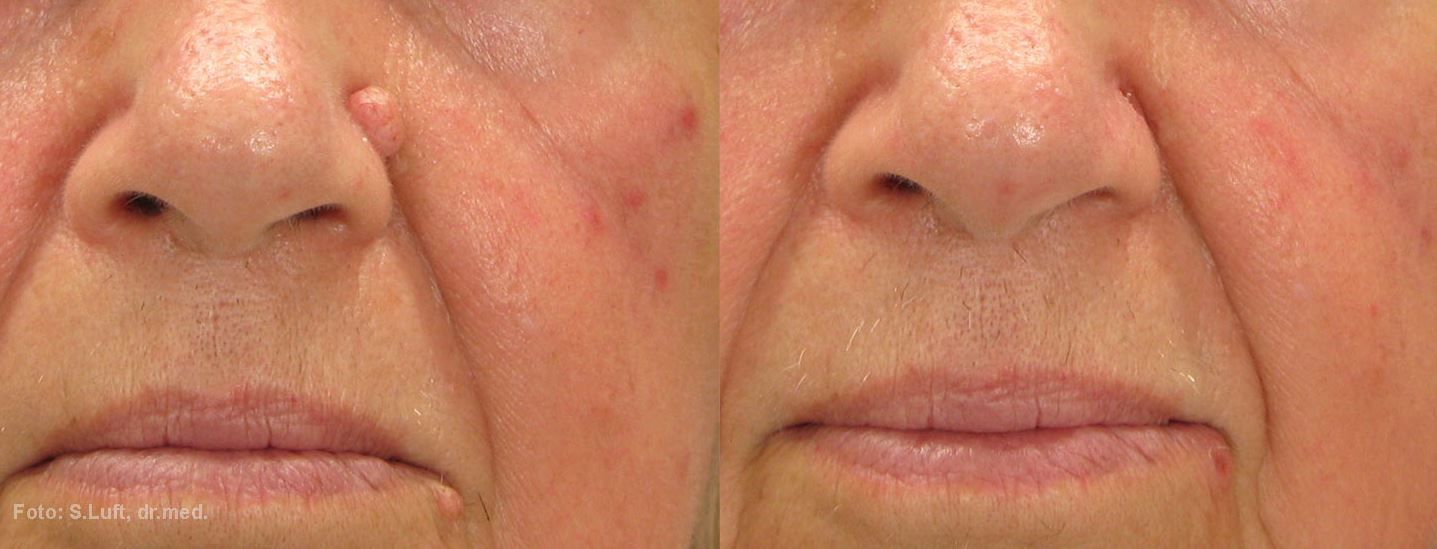
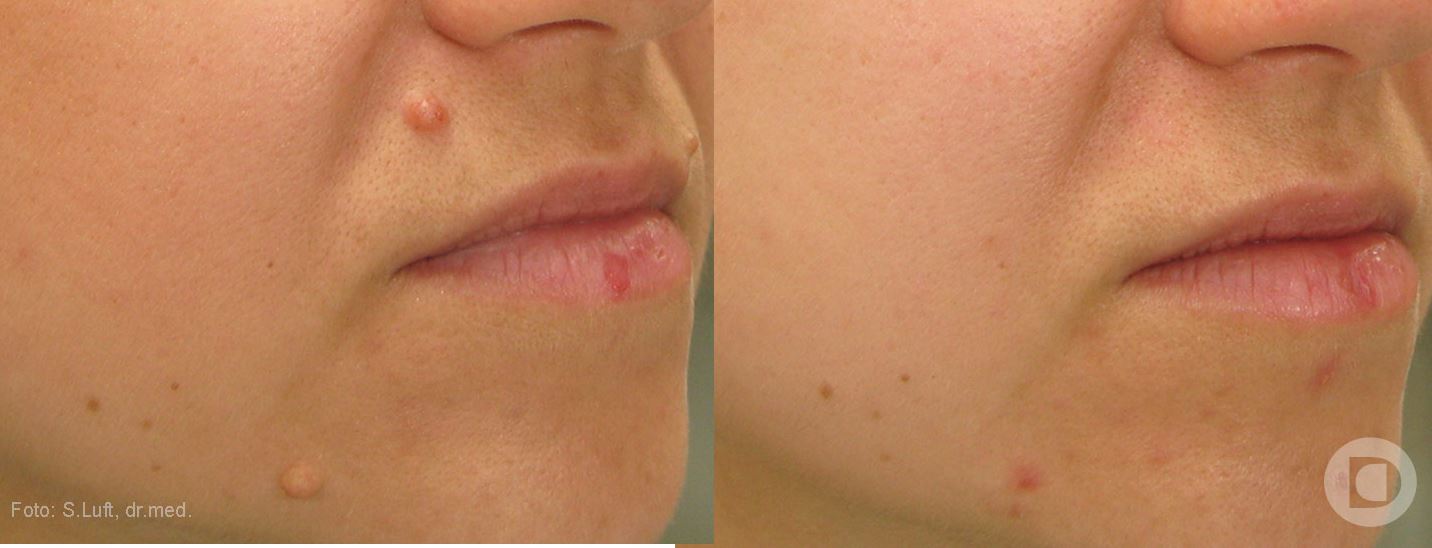
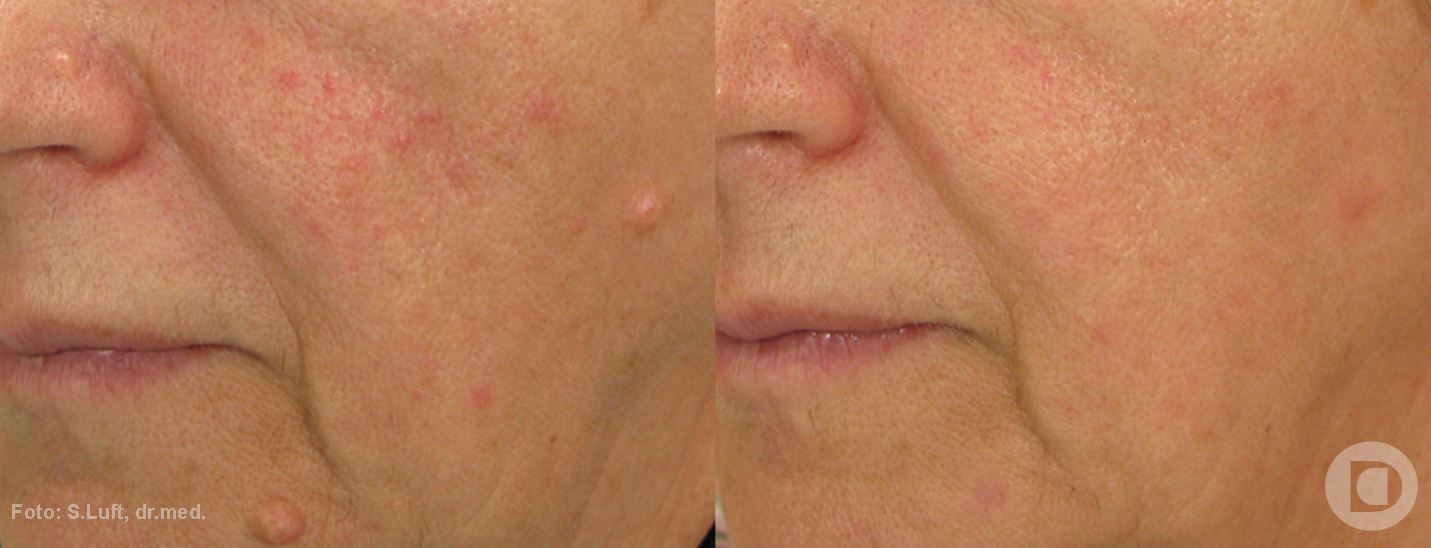


Appointments and further information
To book an appointment, contact us Monday to Friday from 8:00 to 16:00 on the following telephone number: 064 12 80 15 or send an e-mail: info@derma-rogaska.si