
Photodynamic therapy (PDT) is a safe, clinically validated and recommended method for removing and treating skin lesions caused by overexposure to the sun.
The most common of these are actinic keratoses, which are recognised as rough, sharply circumscribed, skin-coloured or reddened areas with yellowish-white scales that appear on the face, the untanned part of the scalp, the ears, the forearms, the backs of the hands and the trunk. Although not dangerous in themselves, they can – over a period of time – lead to the development of a skin cancer called squamous cell carcinoma and it is therefore recommended to treat them. In addition, we use PDT to treat basal cell carcinoma, Mb. Bowen and some skin diseases such as psoriasis, acne, Porokeratosis Mibelli or viral warts.
Operation
Among the most commonly used substances that make the skin photosensitive are drugs containing 5-aminolevulinic acid, abbreviated ALA. The latter is absorbed in the altered cells of the affected areas after targeted application and activated and reacts with oxygen in the cells after exposure to strong red light. This generates a highly reactive and toxic type of oxygen which damages the altered skin cells and removes them in a targeted manner, while leaving the surrounding skin unharmed.
At the same time, the appearance of the skin is improved as collagen is restored during the healing process. Fine lines are smoothed, skin tone is improved and pigment spots are faded. And although photodynamic therapy was discovered for the treatment of pre-cancerous and cancerous skin lesions, it has recently also been used for rejuvenation and acne treatment.
Course of the procedure
Before PDT is performed, thickened skin, scales and scabs are removed, using an ointment prescribed by a dermatologist a few days or weeks beforehand, or with superficial skin scraping or an ablative laser. Alcohol is also used to degrease the skin immediately before applying the photosensitiser gel. During this time, the skin must be completely protected from the sun by a wide covering, preferably aluminium foil. After three hours, the treated area is irradiated with the red light of an LED lamp.
Is the procedure painful?
During the irradiation, there is a burning pain, more intense in the areas where the cancer cells are located, which confirms that they are responding to the treatment.
Who is it not suitable for?
We advise against PDT for people with confirmed allergies to ALA, soya oil and photoactive substances called porphyrins, as well as skin conditions that may be aggravated by the treatment.
Side effects
Most side effects occur during and immediately after irradiation. They last from one to four days, in some cases from one to two weeks, rarely longer. The following side effects are common at the treated parts:
- Redness, pain, skin irritation, swelling, itching, peeling, scabbing, thickening or discharge,
- bleeding and small purulent blisters are rare,
- headache, chills and swelling of the eyelids are much rarer.
After the radiation treatment
Avoid bright light and sun for at least two days after irradiation. Exposure to the latter immediately after the procedure can even cause blistering. Prevent the reappearance of actinic keratoses and other lesions by regular use of headgear, clothing, staying in the shade and consistent application of high SPF creams. After a few days or weeks, assess the effects of the treatment and advise a repeat treatment if necessary.
Photo gallery

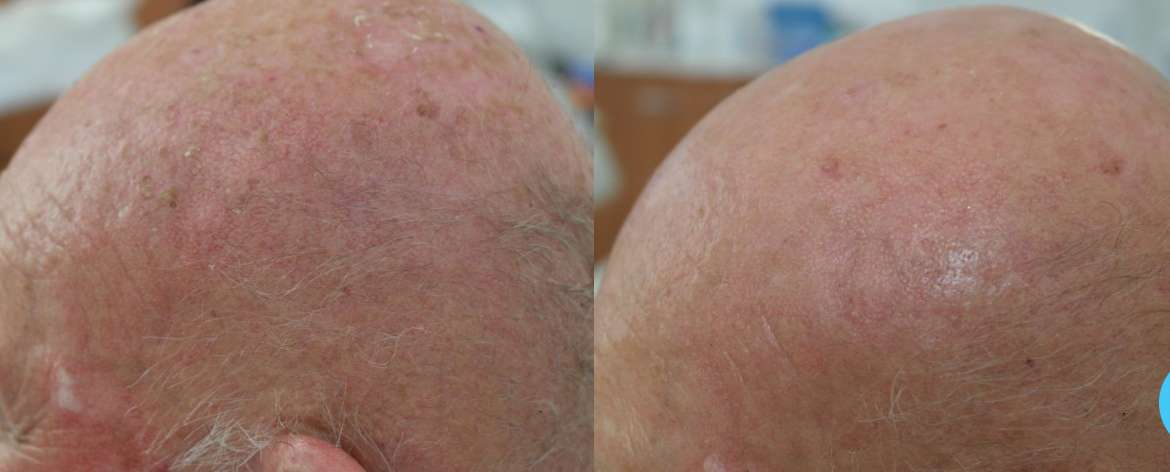
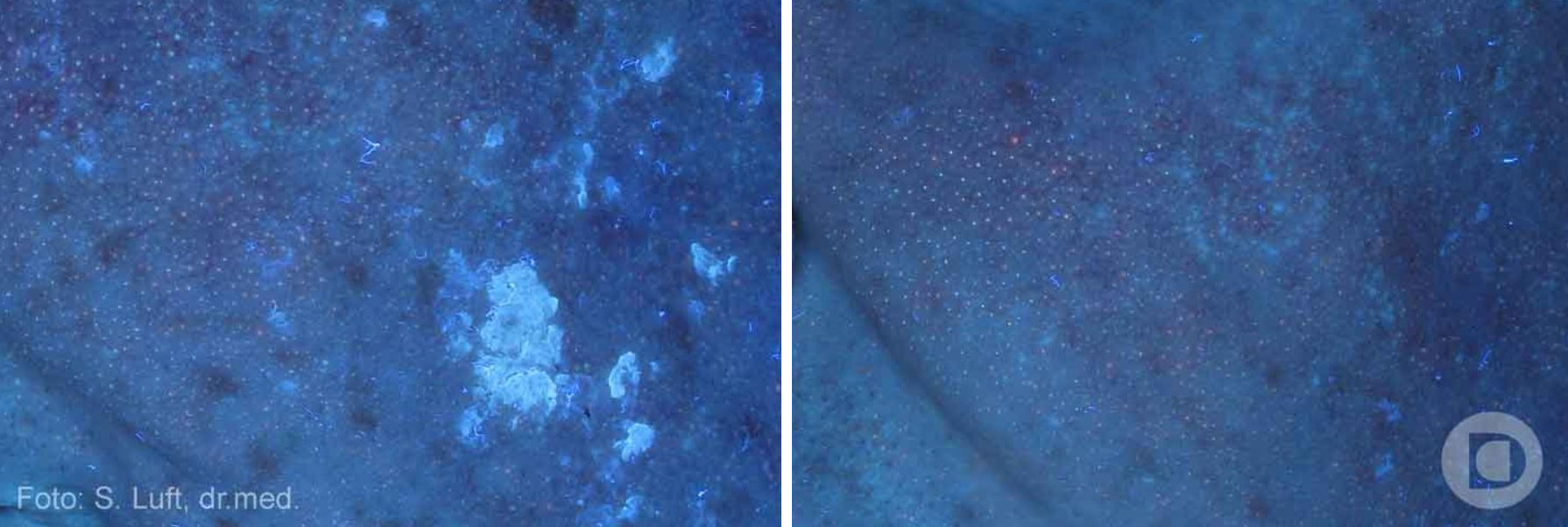
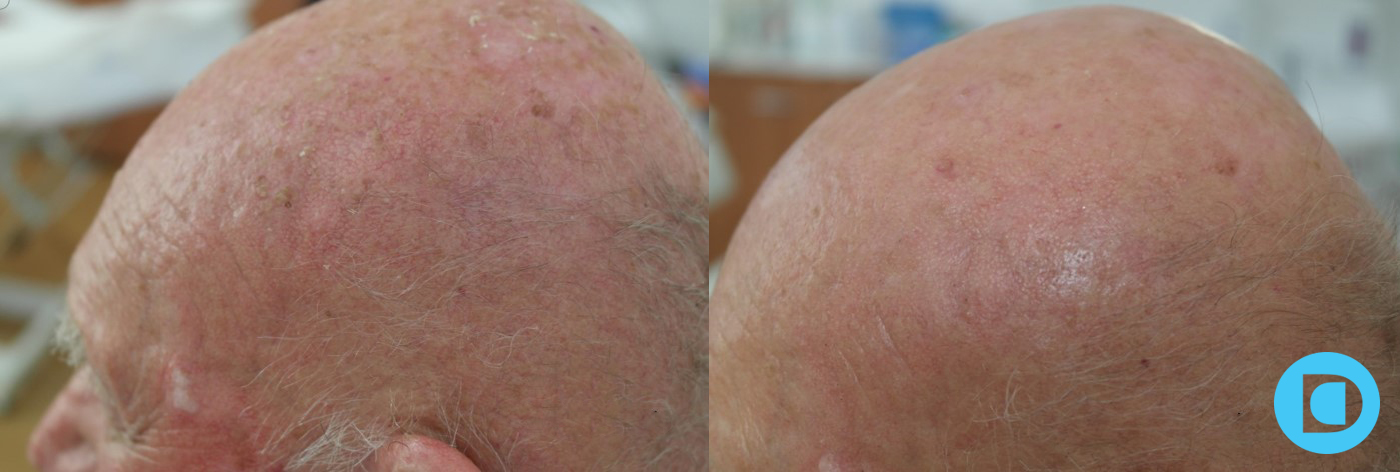
Before and after removal of actinic keratoses with photodynamic therapy.
Before and after removal of actinic keratoses with photodynamic therapy.
Video
Appointments and further information
To book an appointment, contact us Monday to Friday from 8:00 to 16:00 on the following telephone number: 064 12 80 15 or send an e-mail: info@derma-rogaska.si