
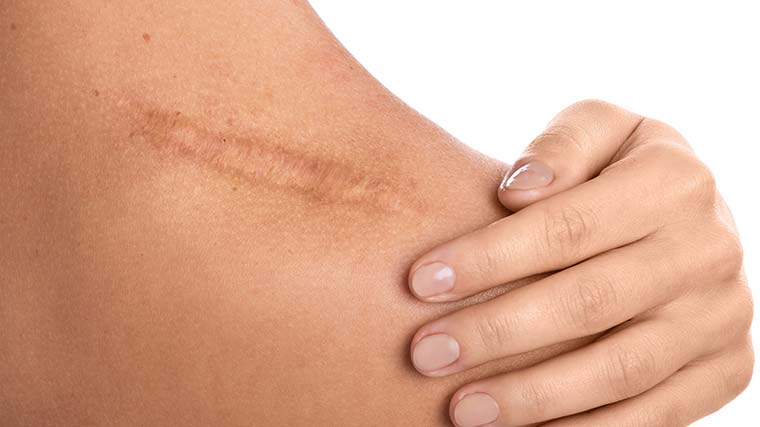
In the process of wound healing, scars are formed, which are firm tissue that replaces normal, healthy tissue.
Scars can form during the healing process of acne, surgical procedures, burns, inflammation of the skin and also as a result of other injuries. Fortunately, their appearance improves over time, although they remain visible. Effective surgical and aesthetic dermatological approaches can efficiently reduce their visibility and thus improve an individual’s self-image. In fact, scars in visible areas can have a significant impact on the quality of life.
Scars can form during the healing process of acne, surgical procedures, burns, inflammation of the skin and also as a result of other injuries. Fortunately, their appearance improves over time, although they remain visible. Effective surgical and aesthetic dermatological approaches can efficiently reduce their visibility and thus improve an individual’s self-image. In fact, scars in visible areas can have a significant impact on the quality of life.
Healing of the scars
At the beginning, scars usually look red and edgy, to become smaller and lighter over a few months. When the skin becomes damaged, our body starts to produce collagen, which closes the wound. The resulting tissue is like a cement patch with no pores or sweat glands. Scars can heal completely within a year or two. During the first three months, most scars are pink, which is due to the dilation of the capillaries at the site, which enables a better blood supply to the healing site. After healing, the capillaries narrow, the colour changes and after several months, when healing is in the normal range, the scar also diminishes.
How can we influence skin healing and scar formation?
Proper treatment of the injured skin immediately after the injury is essential. The latter means applying antibiotic ointment or petroleum jelly, using a plaster, regularly changing a dressing, washing the wound with gel and water as well as using antiseptic solutions. Reduction of inflammation and maintaining a clean and moist environment helps to promote faster healing and less scarring. The injured area should be protected from the sun and must not be rubbed. After the skin has healed, the scar is pink-red in colour. At this stage, silicone patches are most useful as they moisturise the epidermis, which speeds up the maturation of the scar and reduces its size. Despite all these measures, scarring is an unpredictable process and in some cases results in wide and thin scars, or in widespread scars that may be indented below or protrude above the surface of the surrounding skin.
Scarring in visible areas can have a negative impact on the quality of life and may also impede joint and muscle mobility. Another reason to seek help from skin specialists concerns pain, itching and negative impact on well-being. There are several types of scar treatment options that improve the appearance of scars.
Surgical treatment of scars
Surgical treatment of scars can change the position and shape of the scars, releasing the tension in the skin and the consequently restricted joint mobility caused by the scar. Ideally, the scar is removed by surgery and replaced by another, less noticeable form of scar, in the shape of a thin line in the course of the surgical skin incision. The procedure is performed under local or general anaesthesia, depending on the extent and location of the scar. The entire scar may be excised and sutured, or nearby skin may be used to cover the scar – a so-called incision. If this is not possible, a graft from another part of the body, often the thighs or buttocks, is used to replace the defects in the skin with a large surface area. The so-called Z-plasty is a method that can be used to bring the scar in better alignment with natural skin folds, thus making it less visually apparent. Another approach involves tissue expanders, which are inflatable silicone implants that the surgeon places under the skin, usually close to the scar. Through gradual inflation, the implants stretch the skin which is then used to fill in the area where the scar is cut out.
You can find out more about the different scar surgery procedures by talking to a plastic surgeon who performs these procedures at the Rogaška Derma Center. You can make an appointment by calling 051 420 165.
Non-surgical treatment of scars
Effective scar therapy can significantly improve the quality of life. There are many methods of scar treatment in dermatology. These procedures do not remove the scars; however, they can improve their appearance, smooth the sharp edges and unify the colour between the scars and the surrounding skin, making them less noticeable. Certain scar smoothing procedures are more suitable for a particular type of scar, while for other types a combination of methods must be used to achieve the best result. The method of scar smoothing is chosen according to the size, colour, thickness, anatomical location and position of the scar, the type of previous therapy and the quality of the surrounding skin. Thus, there is a wide range of therapeutic options, especially if considering the competence and the experience of the practitioner as well as the availability of modern technologies. Non-surgical scar treatment is effective in the first weeks and months of scar formation and also in the case of mature scars, more than two years old.
Localized therapy with medical creams and silicone patches
Prescription corticosteroid creams and ointments can be used for a few weeks in the initial stages of scar formation, when the scar is pink, to prevent the formation of excessive scar tissue.
Silicone patches should be applied immediately after the skin has healed and are recommended to be used for more than 12 hours a day for several weeks or months. They allow intensive moisturisation of the scar, which accelerates its maturation and reduces the duration of redness and limits excessive scarring. Silicone gels have a similar effect, though a less pronounced effect.
Treatment of thickened scars (hypertrophic and keloid) with corticosteroids or 5-fluorouracil injections is performed to reduce their volume, redness, pain, itching and bulging above the skin surface in the immediate area. The injected drugs have an inhibitory effect on collagen formation in the scar, which reduces its size. The procedure is performed by repeated injections of small amounts of the drug using fine needles, applied several times in succession every 4-6 weeks.
Injecting indented scars with fillers improves their appearance by smoothing them with the surrounding skin surface. The fillers used are hyaluronic acid fillers, which have no lasting effect, and so-called stimulating fillers (Radiesse, PLLA, Sculptra, Lanluma, Olidia, Ellanse), whose effect is longer-lasting, due to the stimulation of the production of collagen and elastin which fill in the missing connective tissue in the skin due to the scarring.
Compression therapy of thickened scars (hypertrophic and keloid) is applied when the scars bulge above the skin surface. It is performed using compression devices in the form of silicone pads that fit the shape of the scar, with pressure being applied to the pads and the scar by using compression garments or belts. Compression therapy is effective at an early stage of scar healing, when the scars are red. The constant pressure reduces the blood supply to the scar and, as a result, less collagen is produced. The procedure should be carried out 24 hours a day for 4-6 months. However, this therapy cannot be performed on certain areas of the body.
Scar smoothing using ablative lasers
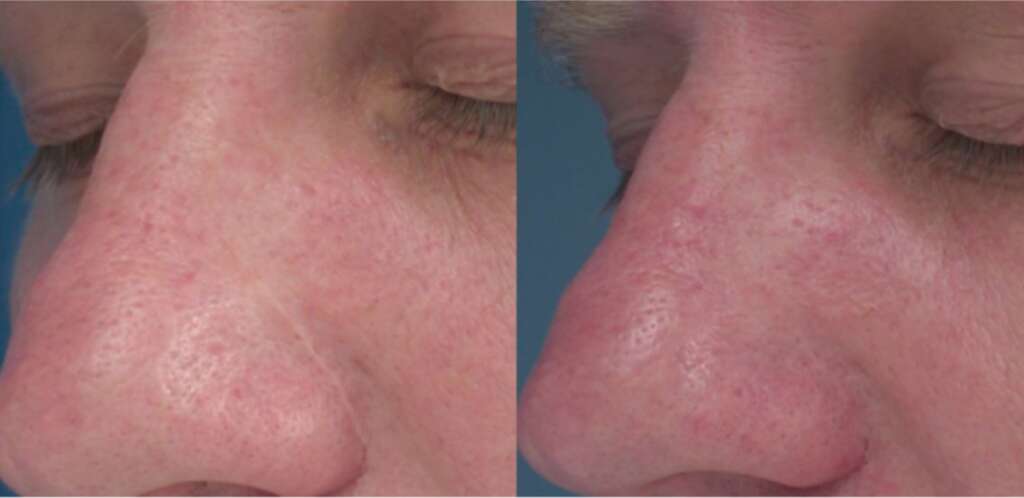
With some lasers, the entire top layer of skin in the area of the scar can be removed, which then heals, leaving the skin smoother, more even-toned and with less visible scarring. In the latter case, the ablative lasers used are the CO2RE laser and the Er:YAG laser.
The ablative lasers can operate in a fractional manner, where only a portion of the scar is removed after the laser tip passes over the surface of the scar – evenly spaced point-by-point removal of the top layer of the skin in the form of columns. The fractional procedure is shorter and has fewer potential side effects compared to the fully ablative procedure, which is why the use of ablative lasers is nowadays the predominant form of scar smoothing. The procedure can be performed alone or in combination with other scar smoothing procedures.
Treating new scars with vascular lasers
has the effect of reducing their capillary density, which is high during the initial period of their formation. Vascular lasers are most effective in the first weeks of scar formation, as in some cases they reduce the scar formation process due to decreased collagen formation. In the event of scars left after a surgical procedure, the vascular laser can be performed as early as on the day of suture removal. The redness of the scar fades sooner and the scar is less visible due to less collagen formation.
The use of lasers plays an important role in the treatment of scars
The 2020 international recommendations for the treatment of scars following trauma and contracture have made the use of lasers the first choice of therapy for scars. Patients who do not have access to these therapies also do not have the opportunity to receive the best therapy for scars formed after skin trauma. The simultaneous use of several laser systems in a single appointment or consecutively is advised. The combined use of lasers and other treatments such as healing creams, injectable medications is advised for hypertrophic scars.
Scar smoothing with Skinpen medical microneedling
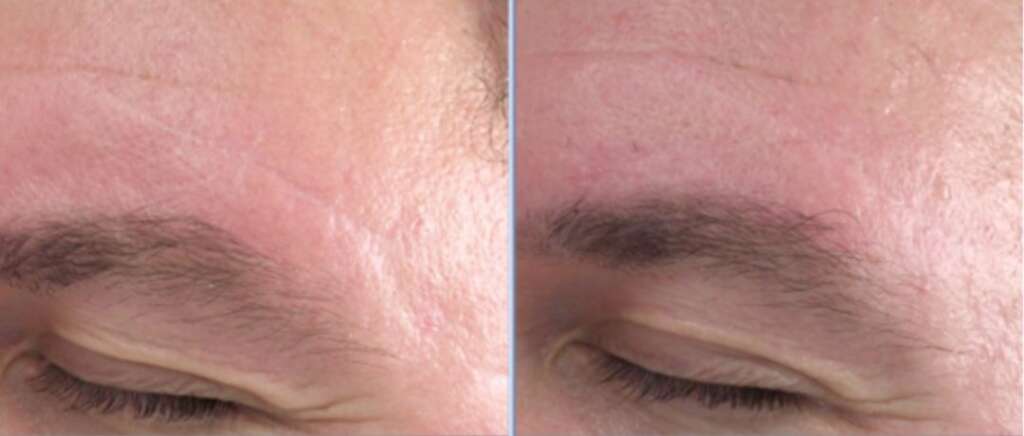
Several types of scars from acne, burns and trauma can be improved by using Skinpen microneedling. The device works by means of thin needles that pierce the scar tissue at high speed, breaking the collagen fibres in the scars and ultimately reshaping the hard scar tissue. The micro-damage to the skin stimulates the formation of new collagen, which reduces the depth of the scar and, in some cases, further stimulates the pigment cells, which restores the natural colour of the skin to the pale or white scar. Read more at Skinpen microneedling.
Smoothing of indented acne scars with RF microneedling
Smoothing of indented acne scars with RF microneedling is performed using the Fractora and Morpheus8 devices. The procedure is partly similar to Skinpen microneedling, with the difference being in the use of thin insulated needles with an active tip, through which a radiofrequency current is delivered to the deeper part of the dermis. The point-by-point heating of the dermis triggers the process of collagen and elastin as well as hyaluronic acid formation in the skin, which fills the hollows created by acne. The process of skin connective tissue re-formation lasts for several months after the procedure.
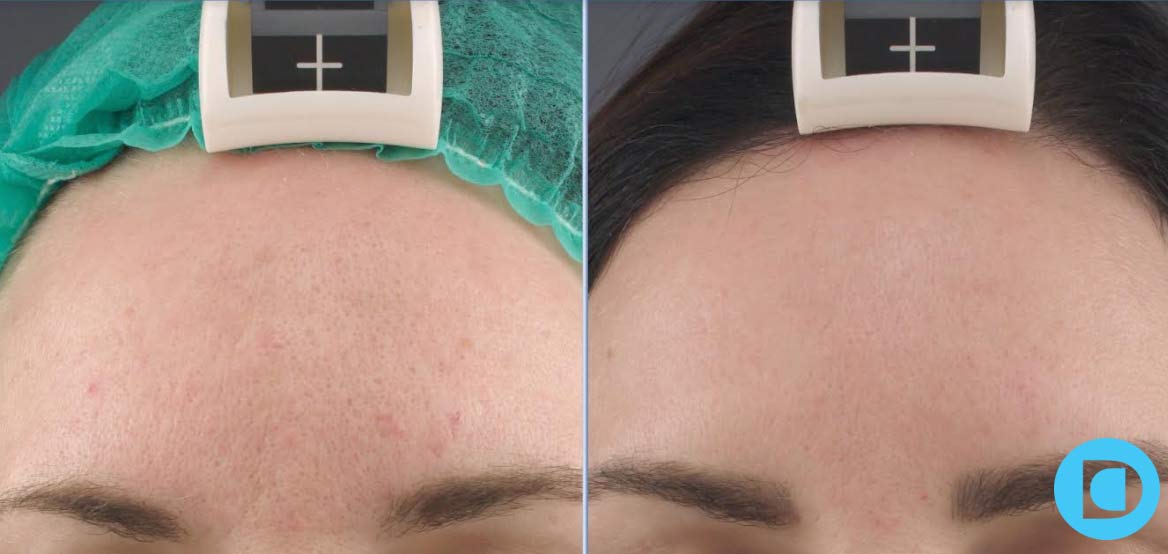
Subcision of scars
Severe inflammation changes the structure of the skin. In the healing process after inflammation, the connective tissue of the skin and subcutaneous tissue collapses, causing indentations on the surface. At the bottom of these scars, new hard scar tissue is formed, pulling the scar base downwards. Scar subcision is a minor procedure that cuts the collagen bundles at the base of the scar to release it. The bottom of the scar is then brought closer to the surface of the skin.
You can discuss the suitability of the procedure, indications and contraindications, combinations of different procedures, advantages and disadvantages with a dermatologist at the Rogaška / Maribor Derma Center.
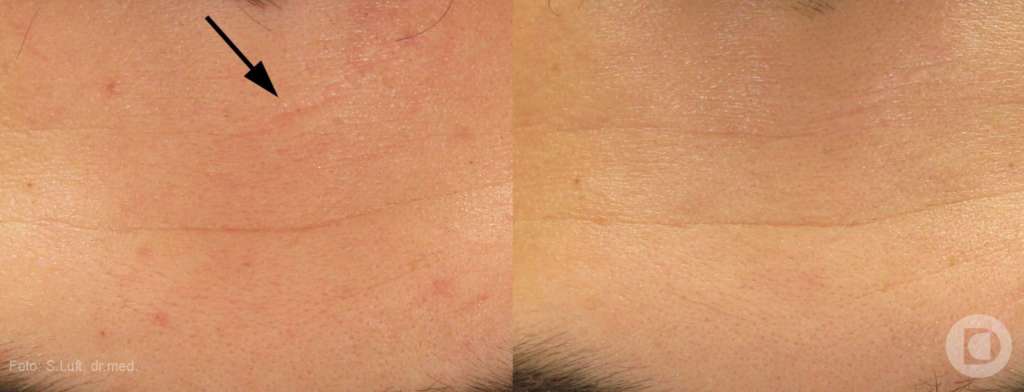
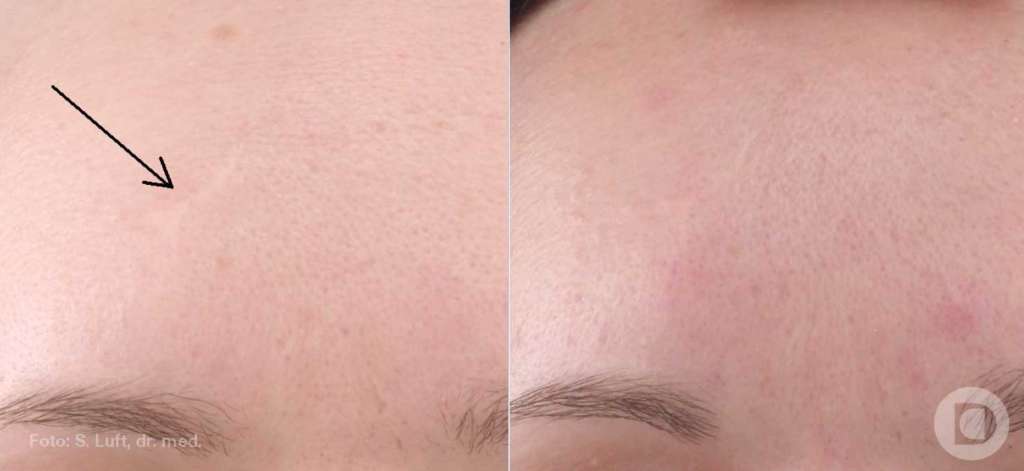
GALLERY
Appointments and further information
To book an appointment, contact us Monday to Friday from 8:00 to 16:00 on the following telephone number: 064 12 80 15 or send an e-mail: info@derma-rogaska.si