
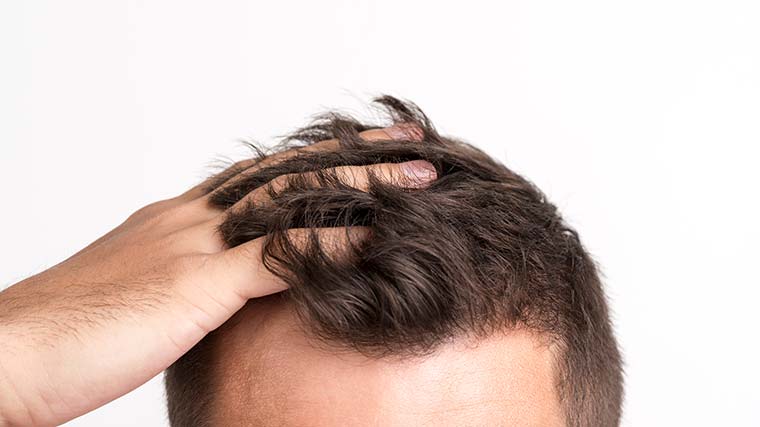
There are around 100,000 hairs on the head. Light-haired people have about 120,000 hairs, while the number with red-haired persons tends to be around 80,000. There are three types of hair: lanugo is the thin hair seen in new-born babies, vellus hair is the unpigmented, thin and very superficial hair in the skin, and terminal hair is the thick, pigmented hair seen on every scalp or seen as body hair.
Hair and body hair grow in cycles. The growth phase is called the anagen phase, followed by the catagen phase, which is the intermediate stage between growth and shedding. Next is the telogen phase, when the hair falls out of the hair follicle. This is the last phase of the hair cycle, which lasts until new hair appears on the surface of the skin, after which the growth cycle repeats. The catagen phase is the same length everywhere, while the duration of the anagen and telogen phases varies considerably depending on the area of the body, and the cycles are also inconsistent with each other. On the scalp, most of the hair, 85-90%, is in the growing phase, while the opposite is true of the shins, where only 12-38% of the hairs are in the growing phase. The duration of the anagen phase determines the length of the hair and hair shafts. On the scalp, the anagen phase is the longest and lasts from 48 to 72 months, after which the hair falls out. It is shortest on the eyebrows, where it lasts from 1 to 2 months.
Hair loss is a very common condition which can represent a serious problem and a cause for concern for the patient. The medical term for hair loss is alopecia, in which patients experience hair loss, poor hair quality, thinning hair and bald patches on the scalp. Alopecia may be limited to small areas or may be expressed over the entire scalp.
Causes of hair loss
There are many causes of hair loss. Sudden cessation of hair growth can be caused by certain drugs used to treat cancer and autoimmune diseases of the body and scalp. In these cases, hair loss is dramatic and extensive, and hair falls out in large numbers per pull. Hair loss occurs every day. Around 100 hairs falling off per day is considered to be a normal occurrence, with a possible increase in spring or autumn. Increased hair loss is seen after childbirth, fever, after major surgery, weight loss or can be due to certain medications. Sometimes the cause of increased hair loss cannot be identified and the condition may persist for several years. A genetic influence on the thinning of the scalp causes permanent hair loss, which is called androgenetic alopecia. It occurs more often in men and less often in women. Increased hair loss is not noticeable as the process of thinning and hair reduction is long and takes place over many years. The gradual receding of the hair on the forehead and on the top of the scalp results in the typical male pattern baldness. In women, there is never complete baldness, but there is considerable thinning of the hair, especially at the front of the scalp. Androgenetic alopecia can be prevented if treatment is started at an early stage.
Some internal diseases, thyroid deficiencies and iron deficiencies can all contribute to poor hair quality. Scalp damage, bacterial and fungal infections and various skin diseases can cause limited areas of scarring and baldness.
Hair loss treatment
Although an accurate diagnosis of hair loss can sometimes be very difficult, a dermatologist can use information about the causes and progression of hair loss, as well as an examination of the scalp, to determine the cause and start treatment, the form of which depends on the diagnosis of the condition. Medicines are used in the form of lotions, injections into the skin of the scalp and tablets. In some forms of hair loss, injections of the body’s own platelet-rich plasma into the scalp also help. Improvement is gradual and treatment must be carried out for at least six months before a change in hair density can be observed.
In some cases, it is necessary to continue treatment indefinitely if the improved scalp density is to be maintained.
GALLERY
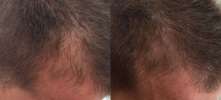
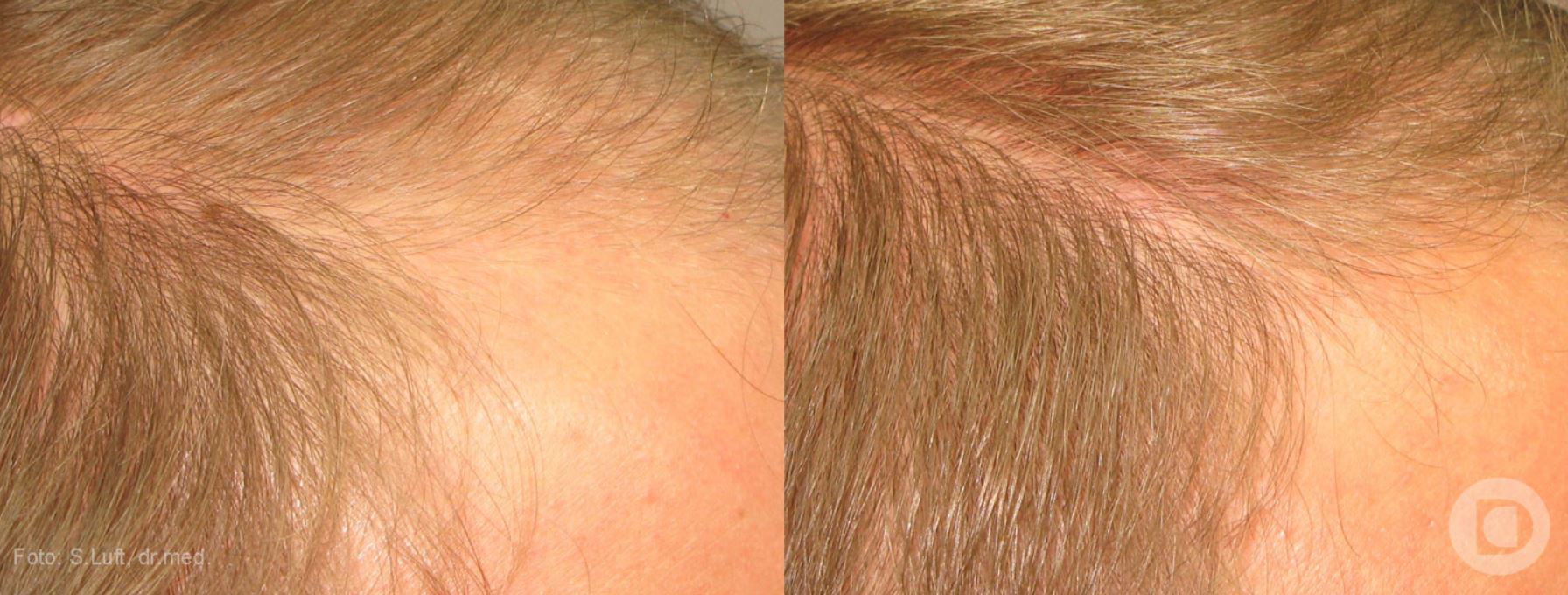
Before and after 10 months of PRP treatment and hair loss medication.
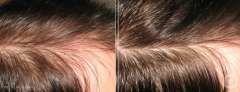
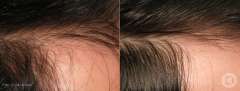
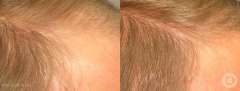
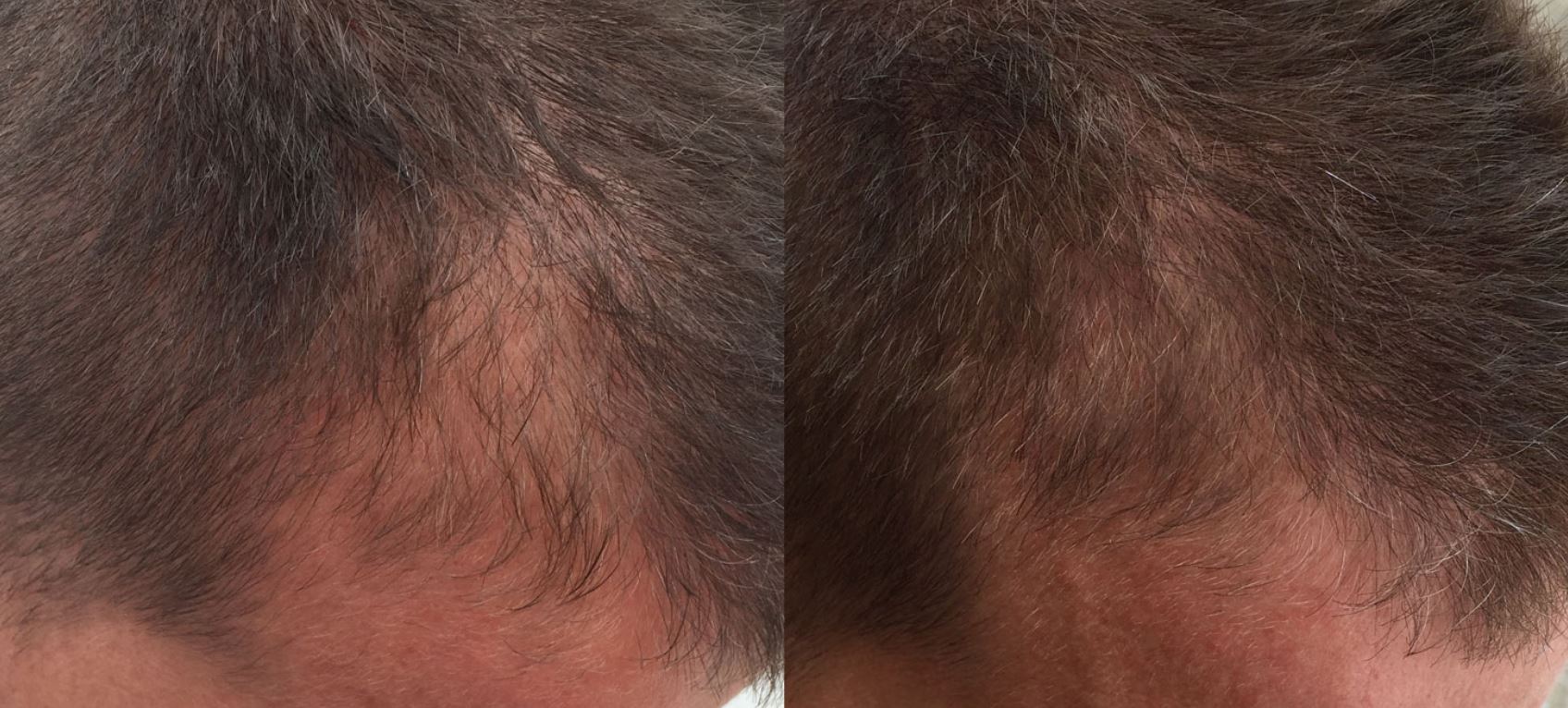
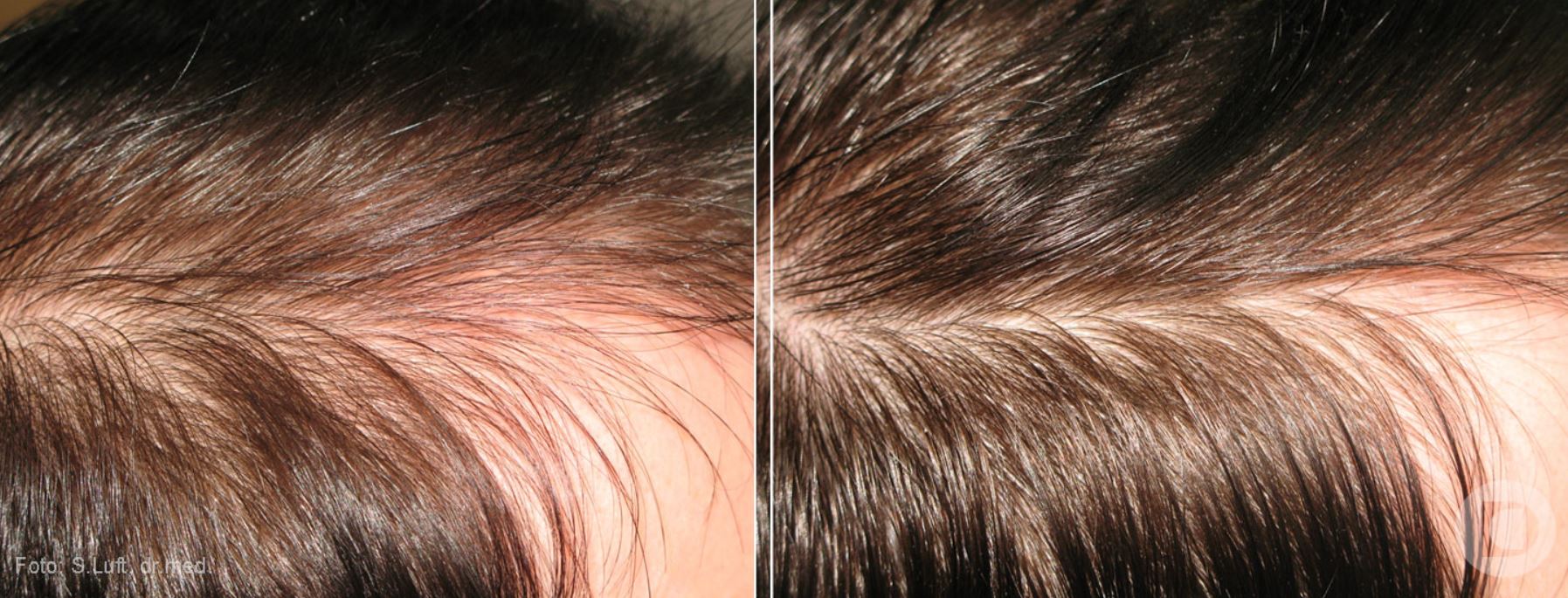
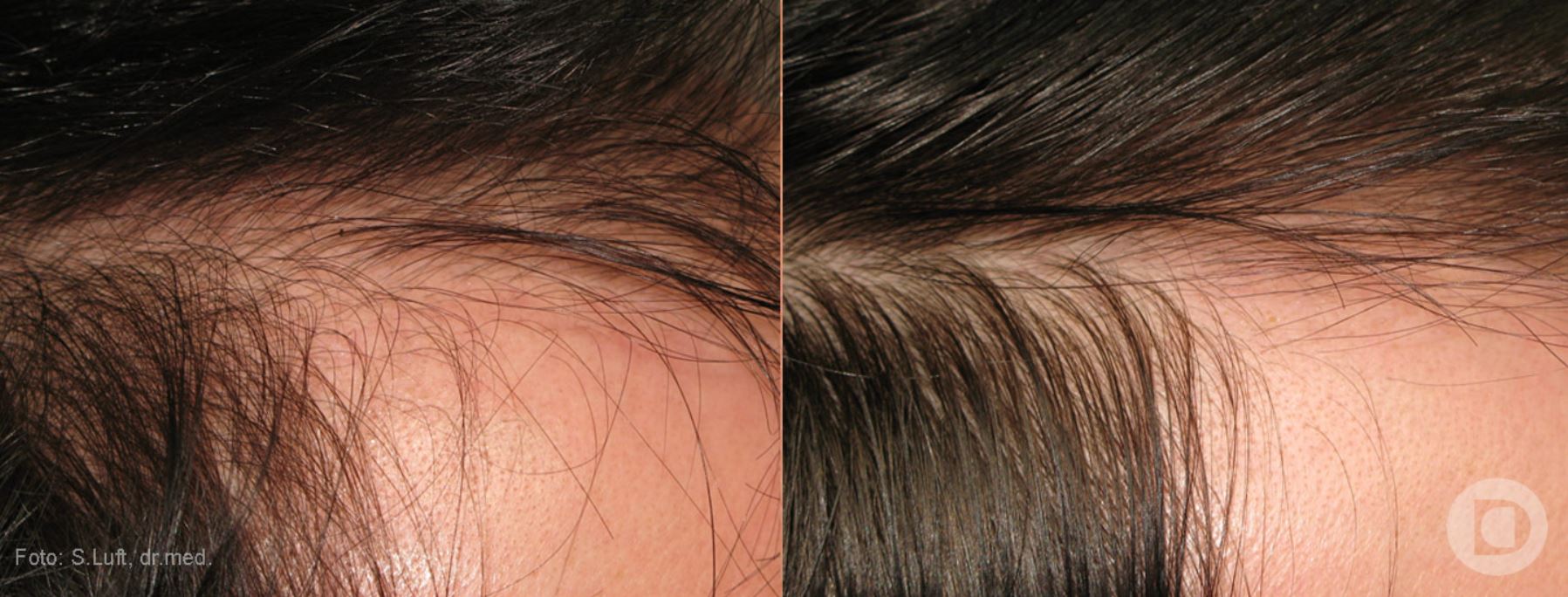
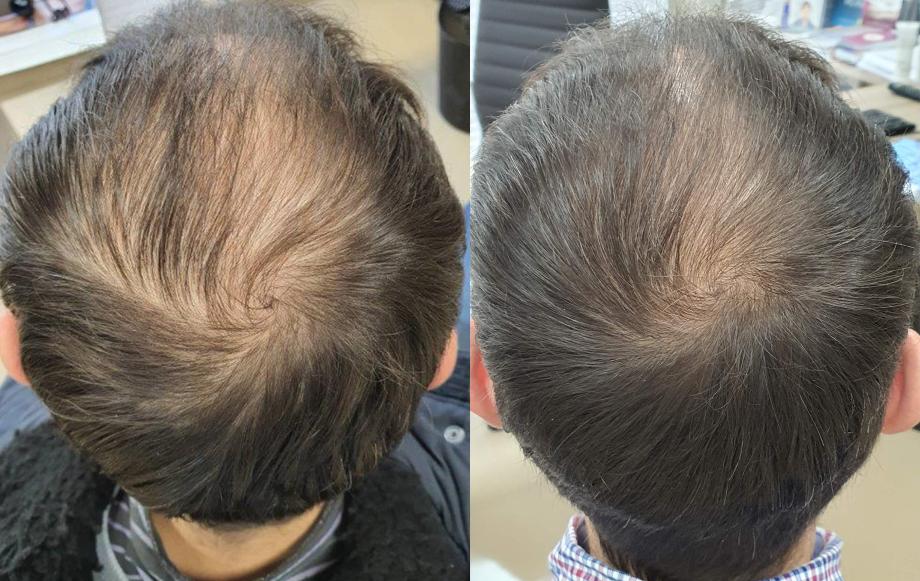
Before and after 10 months of treatment with medication and PRP therapy.
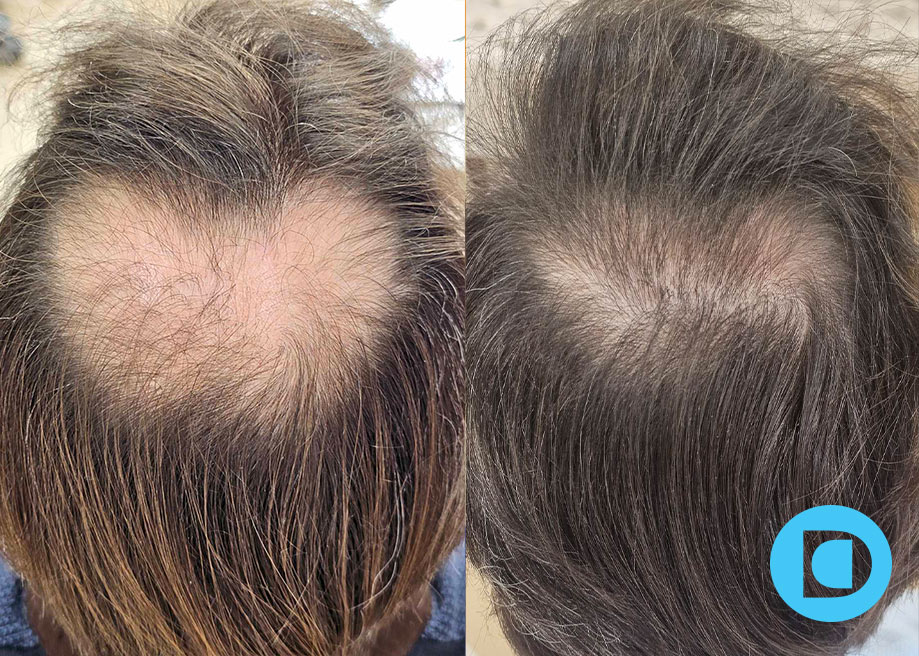
Before and after 1 year of treatment for androgenic alopecia with medication and three PRP therapy sessions.
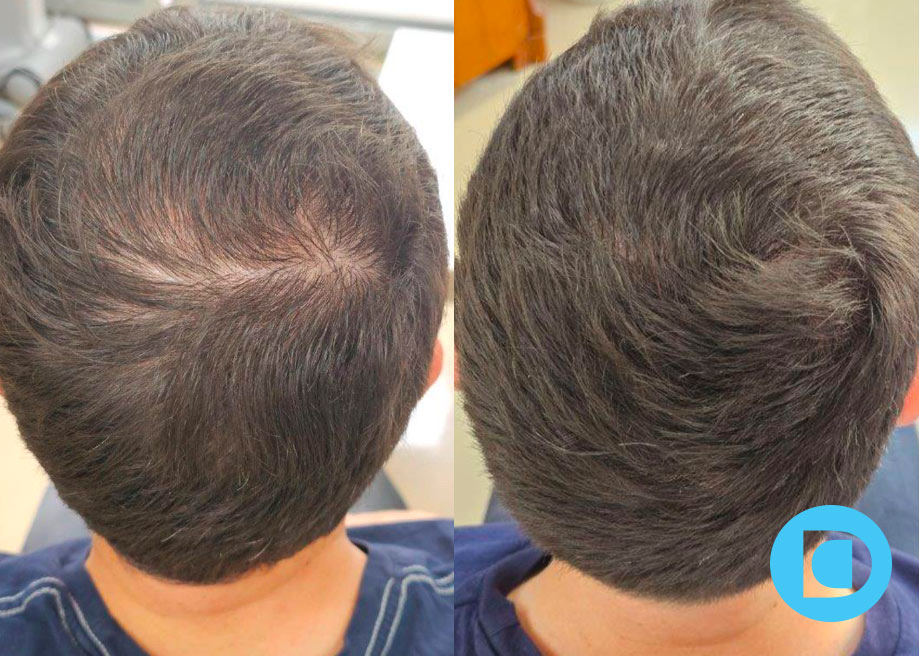
Androgenic alopecia lasting 6 years — before and 9 months after starting treatment with medication.
Appointments and further information
To book an appointment, contact us Monday to Friday from 8:00 to 16:00 on the following telephone number: 064 12 80 15 or send an e-mail: info@derma-rogaska.si