
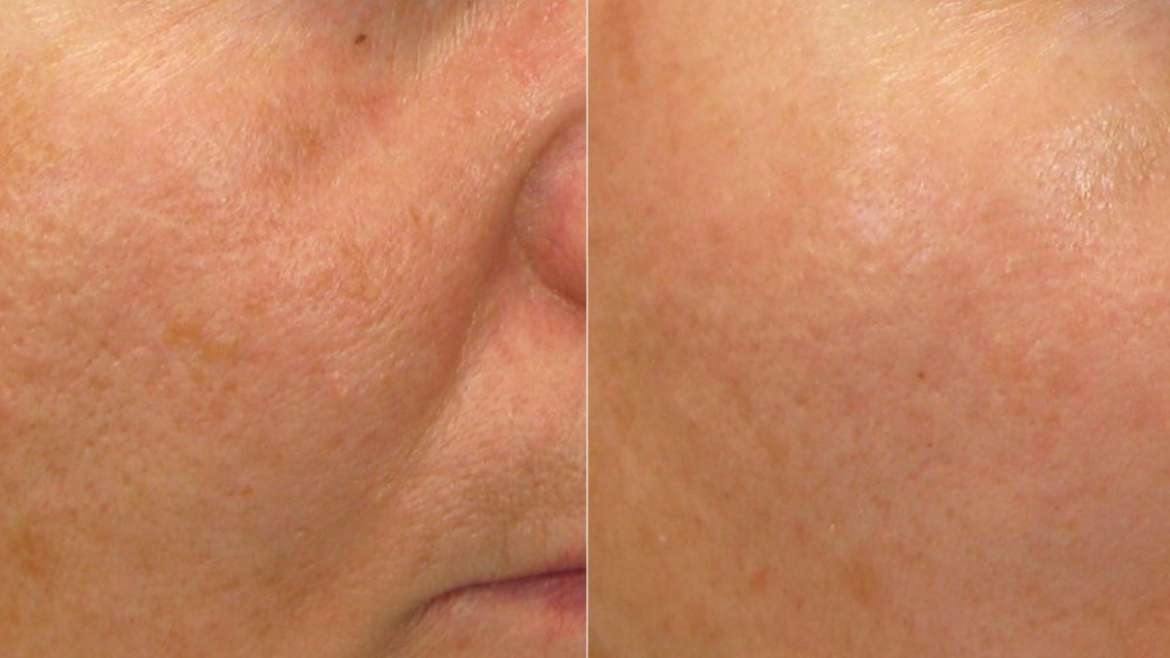
Fruit acids are also called alpha hydroxy acids, or AHAs, because of the hydroxyl group in the so-called alpha position. These include glycolic, lactic, citric, malic and almond acids.
In the past, they were extracted from fruits, plants and dairy products, while today synthetic chemistry is their primary source. The association with fruit is therefore somewhat misleading, as is the belief that they are natural and in all cases completely safe to use. In lower concentrations (8-18%) they are added to creams, lotions and cleansing foams, and in higher concentrations (20-70%) they are the active ingredient in superficial chemical peels. They are used to lighten the skin and fade pigment spots, reduce fine lines and wrinkles, smooth the epidermis, moisturise and reduce the appearance of pores on the nose and cheeks, so it is not surprising that they are very popular among users. AHA creams or superficial fruit acid chemical peels are thus suitable for non-sensitive oily skin, comedonal acne problems, sun-damaged and thickened skin, or porosity disorders (ichthyosis, keratosis pilaris). The effects are visible to the naked eye or with a comparison photograph after a month.
Important
Chemical peels or creams with AHAs are not suitable for sensitive or damaged skin or skin with seborrhoeic or atopic dermatitis. We therefore advise everyone to consult a dermatologist and use the VISIA digital facial analysis to get to know their skin type before buying.
Polyhydroxy acids, or PHAs, are a second generation of hydroxy acids, similar in action to AHAs but completely different in chemical composition. Gluconolactone is an integral part of the skin and promotes controlled exfoliation, moisturises and restores the skin without causing the transient increase in sun sensitivity that is typical of AHA creams.
Similar effects are also observed when using malobionic acid which markedly increases the moisture of the epidermis and has a strong anti-inflammatory effect. As it does not cause irritation, it is particularly suitable for sensitive, dry, irritated skin after chemical peels and other procedures or for the treatment of rosacea.
The third generation of hydroxy acids is lactobionic acid which smooths wrinkles, evens uneven tension and rough surfaces and reduces enlarged pores. It causes undetectable exfoliation, promotes regeneration and intensive hydration, and is soothing. It is particularly suitable for very dry, irritated and red skin and for the treatment of rosacea.
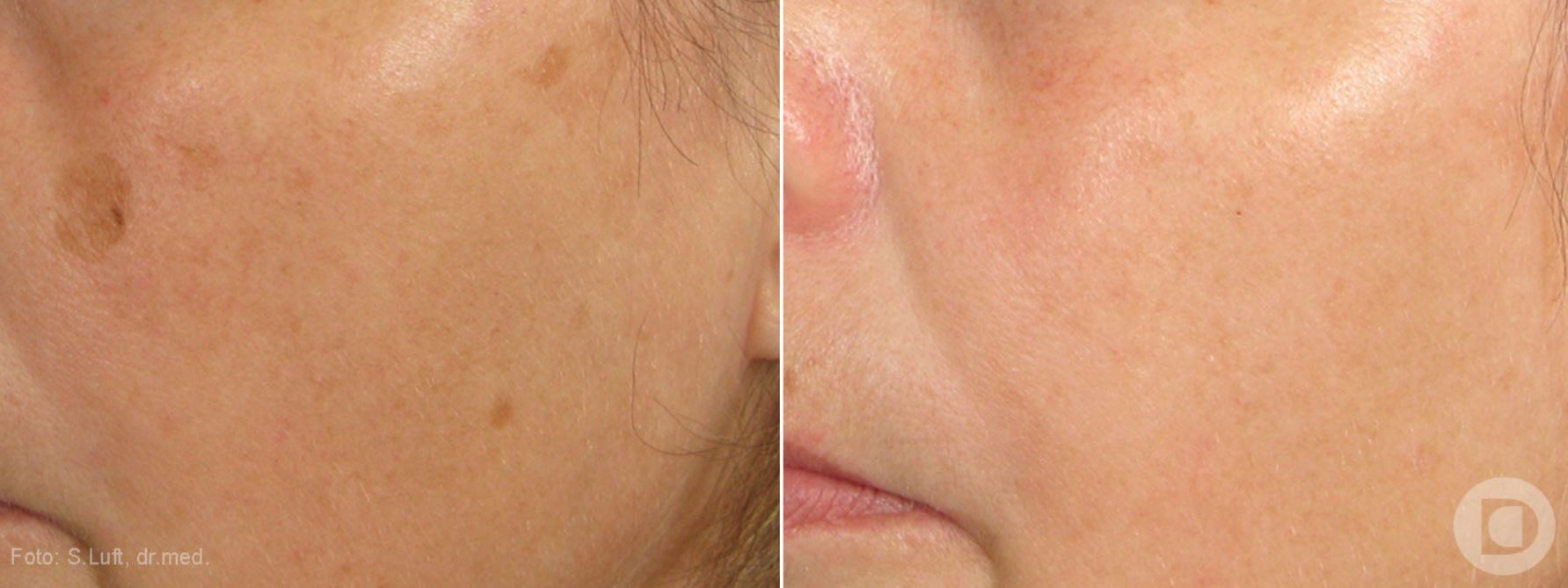
Photo gallery
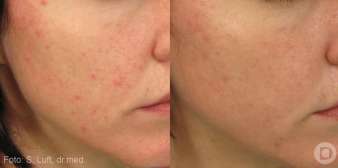
Before and after using an AHA cream.
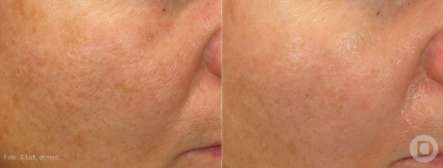
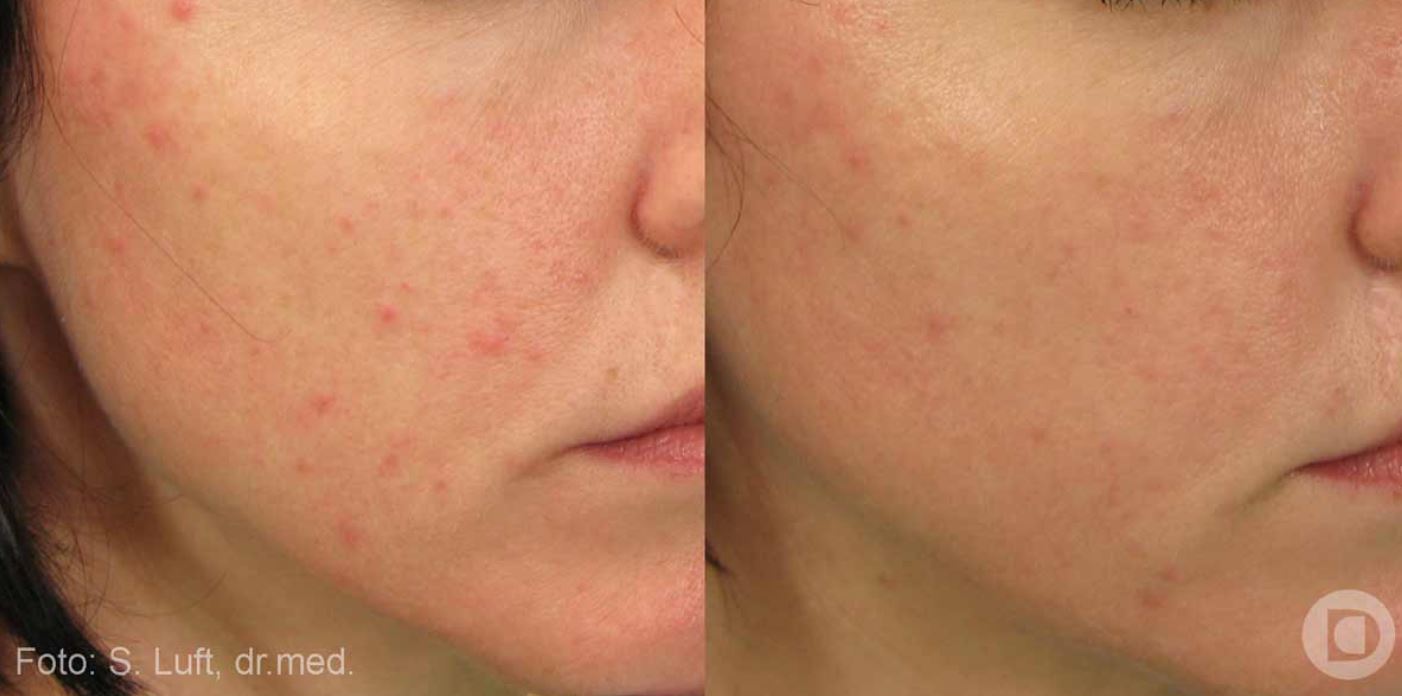
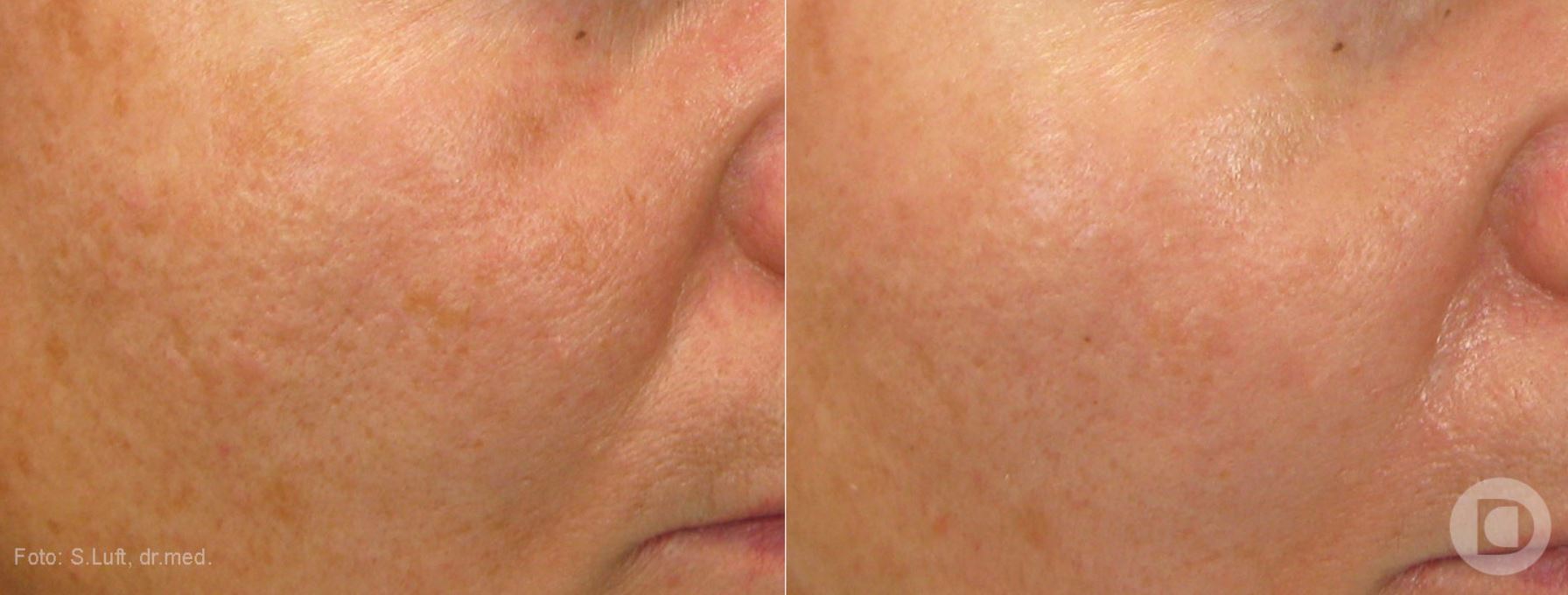
Improved skin radiance and fading of spots after a series of AHA chemical peels.
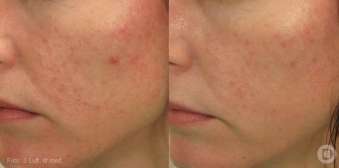
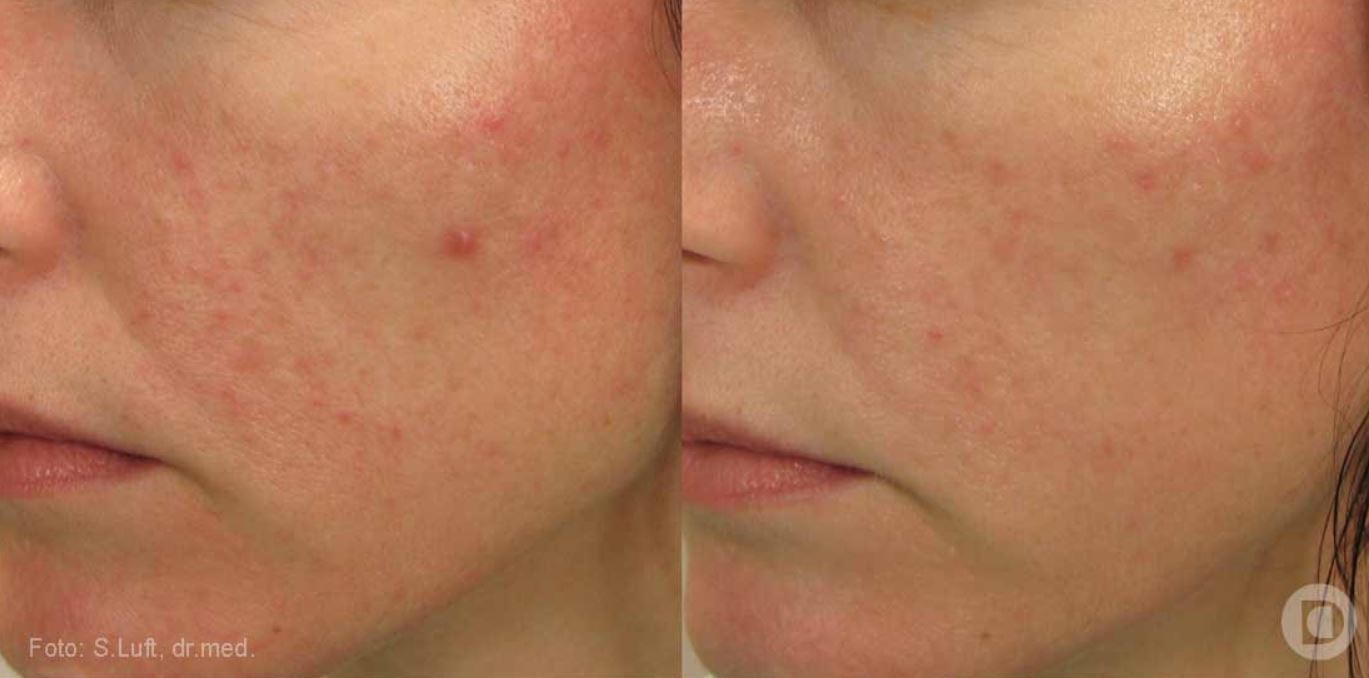
Before and after a series of chemical peels with fruit acids.
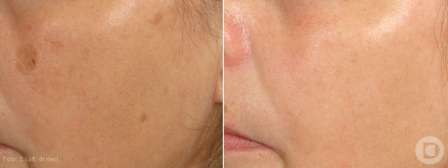
Improvement in skin texture after using AHA creams.
Appointments and further information
To book an appointment, contact us Monday to Friday from 8:00 to 16:00 on the following telephone number: 064 12 80 15 or send an e-mail: info@derma-rogaska.si